

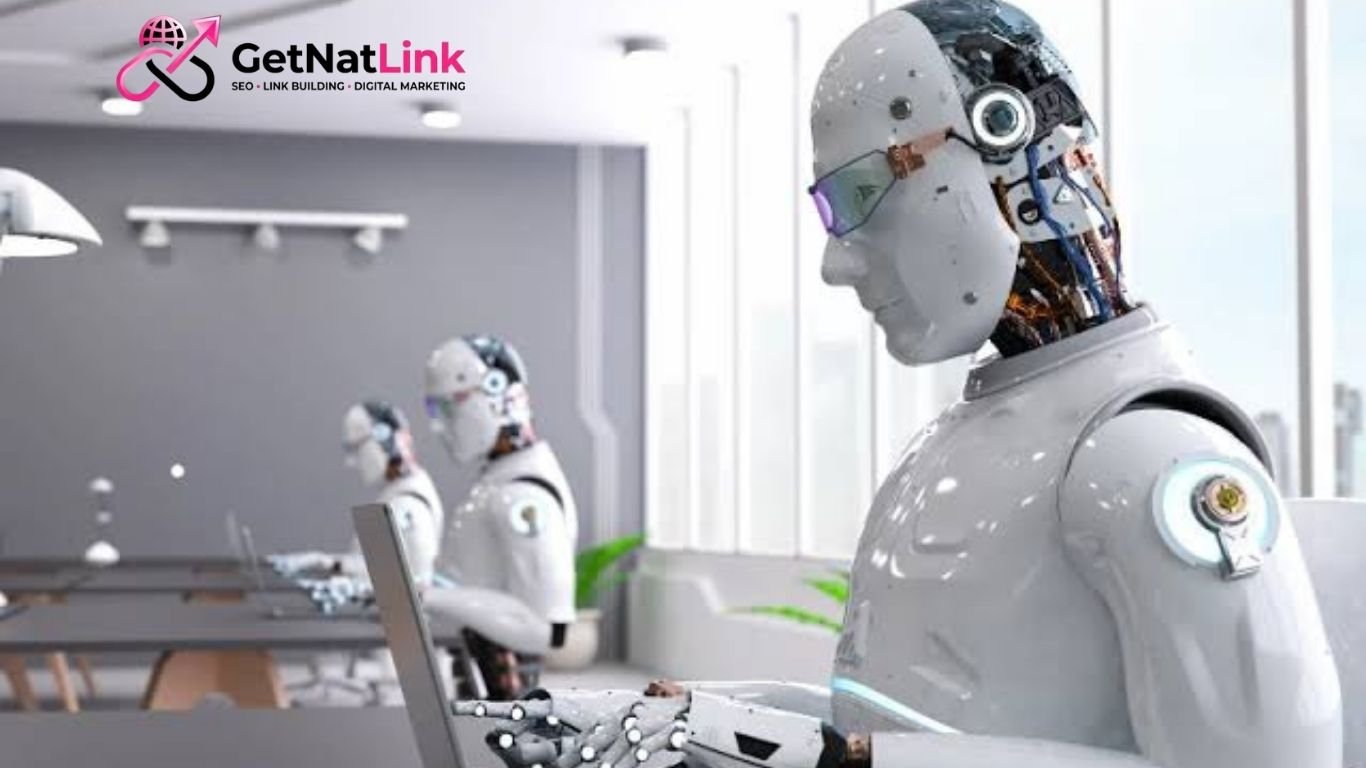
Technology is evolving at an unprecedented pace, transforming industries, economies, and everyday life. From artificial intelligence revolutionizing workplaces to quantum computing solving problems beyond the capabilities of traditional computers, emerging technologies are redefining how we live, work, and interact with the world.
Businesses, governments, and individuals who stay informed about these innovations will be better prepared for future opportunities and challenges. Whether it’s healthcare, education, manufacturing, finance, or entertainment, technological advancements continue to unlock new possibilities that were once considered science fiction.
Why Emerging Technologies Matter
Emerging technologies are more than just trends—they are powerful innovations capable of reshaping global economies and improving quality of life. Companies that adopt these technologies early often gain a competitive advantage through improved efficiency, innovation, and customer experiences.
Key benefits include:
- Increased productivity
- Better decision-making
- Reduced operational costs
- Enhanced customer experiences
- Sustainable business practices
- Improved healthcare solutions
- Smarter cities and infrastructure
Artificial Intelligence (AI)
Artificial Intelligence remains one of the most transformative technologies of the modern era. AI enables machines to simulate human intelligence, allowing them to learn, reason, solve problems, and make decisions.
Applications of AI
- Virtual assistants
- Chatbots
- Healthcare diagnostics
- Fraud detection
- Recommendation systems
- Autonomous vehicles
- Predictive analytics
Benefits
- Automates repetitive tasks
- Improves productivity
- Enhances customer service
- Reduces human error
- Supports better business decisions
Future Outlook
Generative AI, AI-powered robotics, and autonomous systems will continue expanding across every major industry.
Machine Learning
Machine Learning (ML) is a subset of AI that allows systems to learn from data without explicit programming.
Common Uses
- Email spam filtering
- Financial forecasting
- Medical diagnosis
- Image recognition
- Voice assistants
- Personalized marketing
Industries Using ML
- Banking
- Healthcare
- Retail
- Manufacturing
- Transportation
- Agriculture
Machine learning models continue improving through larger datasets and more sophisticated algorithms.
Quantum Computing
Quantum computing has the potential to solve problems impossible for traditional computers.
Unlike classical computers that use bits (0 or 1), quantum computers use quantum bits (qubits), enabling enormous computational power.
Potential Applications
- Drug discovery
- Climate modeling
- Financial optimization
- Logistics
- Cybersecurity
- Scientific simulations
Benefits
- Faster complex calculations
- Improved optimization
- Advanced cryptography
- Better research capabilities
Although still developing, quantum computing could revolutionize multiple industries within the coming decades.
Internet of Things (IoT)
The Internet of Things connects physical devices to the internet, allowing them to collect and exchange data automatically.
Examples
- Smart homes
- Smart appliances
- Wearable devices
- Connected vehicles
- Industrial automation
- Smart agriculture
Benefits
- Real-time monitoring
- Predictive maintenance
- Energy efficiency
- Improved convenience
- Reduced operational costs
As 5G expands globally, IoT adoption will accelerate significantly.
5G and Future Wireless Networks
5G delivers dramatically faster internet speeds with lower latency compared to previous generations.
Advantages
- Faster downloads
- Improved streaming
- Better online gaming
- Reliable video conferencing
- Autonomous vehicles
- Smart cities
Industries Benefiting
- Healthcare
- Manufacturing
- Transportation
- Education
- Entertainment
Future generations such as 6G are already under research.
Blockchain Technology
Blockchain is a decentralized digital ledger that securely records transactions across multiple computers.
Popular Applications
- Cryptocurrencies
- Supply chain management
- Digital identity
- Healthcare records
- Smart contracts
- Voting systems
Benefits
- Transparency
- Enhanced security
- Reduced fraud
- Better traceability
- Lower transaction costs
Beyond cryptocurrency, blockchain continues finding practical business applications.
Extended Reality (XR)
Extended Reality includes:
- Virtual Reality (VR)
- Augmented Reality (AR)
- Mixed Reality (MR)
Applications
- Gaming
- Medical training
- Virtual tourism
- Education
- Retail shopping
- Product design
Future Potential
XR technologies are expected to transform remote work, entertainment, and digital collaboration.
Robotics and Automation
Modern robots are becoming smarter thanks to AI, machine learning, and computer vision.
Industries Using Robotics
- Manufacturing
- Warehousing
- Healthcare
- Agriculture
- Hospitality
- Logistics
Benefits
- Higher productivity
- Improved safety
- Reduced labor costs
- Greater precision
- 24/7 operation
Collaborative robots (Cobots) are increasingly working alongside humans.
Biotechnology
Biotechnology combines biology and technology to improve healthcare, agriculture, and environmental sustainability.
Innovations
- Gene editing
- Personalized medicine
- Tissue engineering
- Synthetic biology
- Biopharmaceuticals
Healthcare Impact
Biotechnology is enabling earlier disease detection, customized treatments, and faster vaccine development.
Green Technology
Sustainability is becoming a major driver of technological innovation.
Examples
- Solar energy
- Wind power
- Electric vehicles
- Smart energy grids
- Carbon capture
- Green hydrogen
Benefits
- Reduced emissions
- Renewable energy
- Lower energy costs
- Cleaner environment
Governments and businesses are investing heavily in sustainable technologies.
Edge Computing
Instead of sending all data to centralized cloud servers, edge computing processes data closer to where it’s generated.
Benefits
- Lower latency
- Faster response times
- Reduced bandwidth usage
- Enhanced privacy
- Improved reliability
Common Applications
- Smart factories
- Autonomous vehicles
- Healthcare monitoring
- Industrial IoT
Digital Twins
A digital twin is a virtual model of a physical object or system.
Industries Using Digital Twins
- Manufacturing
- Aerospace
- Construction
- Healthcare
- Energy
Benefits
- Predictive maintenance
- Performance optimization
- Reduced downtime
- Better product design
Digital twins help organizations simulate outcomes before implementing changes.
Autonomous Vehicles
Self-driving technology continues advancing through AI, sensors, cameras, and machine learning.
Applications
- Self-driving cars
- Delivery robots
- Autonomous trucks
- Agricultural machinery
- Drones
Benefits
- Reduced accidents
- Improved efficiency
- Lower transportation costs
- Better logistics
Although regulations continue evolving, autonomous transportation has enormous future potential.
Cybersecurity Innovations
As digital transformation grows, cybersecurity becomes increasingly important.
Emerging Security Technologies
- AI-powered threat detection
- Zero Trust Architecture
- Behavioral analytics
- Biometric authentication
- Quantum-resistant encryption
Importance
Organizations must continually adapt to evolving cyber threats while protecting sensitive information.
Space Technology
Private companies and government agencies are investing heavily in space exploration.
Emerging Innovations
- Reusable rockets
- Satellite internet
- Lunar missions
- Space tourism
- Asteroid mining research
Future Possibilities
Space technology may eventually support new industries, scientific discoveries, and interplanetary exploration.
Industries Most Impacted by Emerging Technologies
Healthcare
- AI diagnostics
- Remote patient monitoring
- Robotic surgery
- Personalized medicine
Education
- Virtual classrooms
- AI tutors
- Interactive learning
- AR education
Finance
- Blockchain
- Fraud detection
- AI investing
- Digital banking
Manufacturing
- Smart factories
- Robotics
- IoT sensors
- Predictive maintenance
Agriculture
- Precision farming
- Smart irrigation
- Agricultural drones
- Crop monitoring
Challenges of Emerging Technologies
While innovation brings tremendous opportunities, several challenges remain.
Ethical Concerns
- AI bias
- Privacy issues
- Data ownership
- Responsible automation
Workforce Transformation
Automation may replace certain jobs while creating entirely new career opportunities requiring advanced digital skills.
Security Risks
More connected devices increase cybersecurity vulnerabilities.
High Investment Costs
Implementing advanced technologies often requires significant infrastructure investments.
Challenges of Emerging Technologies
While innovation brings tremendous opportunities, several challenges remain.
Ethical Concerns
- AI bias
- Privacy issues
- Data ownership
- Responsible automation
Workforce Transformation
Automation may replace certain jobs while creating entirely new career opportunities requiring advanced digital skills.
Security Risks
More connected devices increase cybersecurity vulnerabilities.
High Investment Costs
Implementing advanced technologies often requires significant infrastructure investments.
How Businesses Can Prepare
Organizations should proactively prepare for technological disruption.
Best Practices
- Invest in employee training
- Adopt digital transformation strategies
- Strengthen cybersecurity
- Monitor emerging trends
- Collaborate with technology partners
- Encourage innovation
Skills Needed for the Future
Technology-driven careers increasingly require modern digital skills.
High-demand skills include:
- Artificial Intelligence
- Data Science
- Cybersecurity
- Cloud Computing
- Programming
- Blockchain Development
- Robotics Engineering
- UX Design
- Digital Marketing
- Critical Thinking
Continuous learning will become essential throughout professional careers.
The Future of Innovation
Emerging technologies rarely develop in isolation. Instead, they increasingly converge to create entirely new possibilities.
For example:
- AI + Robotics
- IoT + 5G
- Blockchain + Finance
- Biotechnology + AI
- Quantum Computing + Drug Discovery
- XR + Education
These combinations will drive the next generation of innovation across virtually every industry.
Frequently Asked Questions
What are the top emerging technologies that will shape the future?
The top emerging technologies include Artificial Intelligence (AI), Machine Learning, Quantum Computing, Blockchain, Internet of Things (IoT), 5G, Robotics, Biotechnology, Green Technology, and Extended Reality (XR). These innovations are expected to transform industries and everyday life.
Why are emerging technologies important for businesses?
Emerging technologies help businesses improve efficiency, reduce costs, enhance customer experiences, automate processes, and gain a competitive advantage. Companies that adopt new technologies early are better positioned for future growth.
How will Artificial Intelligence impact the future?
Artificial Intelligence will revolutionize healthcare, finance, education, manufacturing, and customer service by automating tasks, improving decision-making, and enabling smarter, data-driven solutions across industries.
Which industries will benefit the most from emerging technologies?
Healthcare, finance, manufacturing, education, agriculture, transportation, retail, and energy are among the industries expected to benefit the most from emerging technologies through increased productivity and innovation.
What challenges do emerging technologies present?
Some common challenges include cybersecurity risks, data privacy concerns, ethical issues related to AI, high implementation costs, and the need for workforce reskilling to adapt to new technologies.
Conclusion
The future belongs to organizations and individuals willing to embrace innovation. Technologies such as Artificial Intelligence, Quantum Computing, Blockchain, Biotechnology, IoT, Robotics, Green Technology, and Extended Reality are already transforming industries and redefining how we solve complex problems.
While challenges related to privacy, ethics, cybersecurity, and workforce adaptation remain, the opportunities far outweigh the risks. Businesses that invest in digital transformation, continuous learning, and responsible innovation will be better equipped to thrive in an increasingly technology-driven world.
